+90 554 128 90 95 [email protected]

Sector Application

Wastewater Treatment
Pump Solutions

The complete range of pumps for every stage of the treatment plant, from process chemical dosing to sludge transfer and aeration.

  • Waste Water & Treatment
  • Chemical Dosage
  • Ventilation Blower

Treatment Plants

Pump at Every Point of the Treatment Plant

Wastewater treatment is not a single process, but a chain of successive stages, each stage requiring a different pump. Unblocked transport of raw wastewater in pretreatment and pumping, precise dosing of chemicals in coagulation-flocculation, aeration in the biological stage, slurry transfer in the sludge line and chlorine dosing in disinfection - the right pump selection determines plant efficiency at every step.

Air diaphragm pumps are indispensable in treatment plants thanks to their ability to pass sludge containing solids and fibers without clogging, dry operation and resistance to corrosive chemicals. Dosing pumps are used for precise chemical dosing and energy efficient blower systems are used for biological aeration.

Pumpport offers solutions to all process points of the treatment plant under a single roof with its diaphragm pump, dosing pump and blower product range.

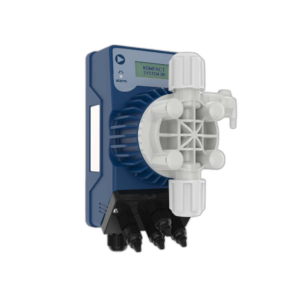
  • Dosing pump: coagulant/flocculant dosing, ±1% accuracy
  • Diaphragm pump: sludge and slurry transfer, clog-free
  • Blower: biological ventilation, energy efficient
  • PP/PVDF body: acid-base neutralization and hypochlorite lines
  • Can run dry - safe even if flow level fluctuates
  • ATEX compliant models (for digestion/biogas areas)

Advantages

All Pump Solutions for Treatment Plant

Precise Chemical Dosing

Reproducible, ±1% accurate flow rate for coagulant, flocculant and disinfectant dosing.

Clog-free Sludge Transfer

Diaphragm pumps transfer activated sludge containing solids and fibers without the risk of clogging.

Energy Efficient Ventilation

Blower systems sized according to load parameters for aeration basins.

Corrosion Resistance

PP/PVDF body + PTFE diaphragm for pH correction, hypochlorite and neutralization lines.

Process Stages

Which Stage
Which Pump?

Treatment Stage Mission Pump / Chemical
Pumping & pre-treatment Raw wastewater transfer Non-clogging diaphragm pump
Coagulation - Flocculation Flocculation and settling of particles Dosing pump: alum, ferric chloride, polymer
Biological (activated sludge) Oxygen to microorganism Blower (side channel ventilation)
Mud line Slurry transfer and dewatering Diaphragm pump
Disinfection Pathogen removal Dosing pump: sodium hypochlorite (PVDF/PTFE)
pH correction Acid-base neutralization PP/PVDF dosing pump

Frequently Asked Questions

Curiosities in Treatment Plant Pump Selection

The treatment consists of several stages: clog-free transfer in pumping and pre-treatment, chemical (alum, iron(III) chloride, polyelectrolyte) dosing in coagulation-flocculation, aeration (blower) in biological stage, slurry/sludge transfer by diaphragm pump in sludge line, sodium hypochlorite dosing in disinfection and acid-base neutralization in pH correction. Each stage requires different pump types and materials.
Repeatable and precise flow rate is essential for dosing coagulants such as alum, iron(III) chloride and PAC and polyelectrolyte flocculants: overdosing means increased cost and sludge, underdosing means decreased treatment quality. Electromagnetic/solenoid dosing pumps aim for ±1% accuracy; diaphragm dosing pumps are preferred for viscous polymers.
Application. Air diaphragm pumps are preferred for transferring activated sludge (usually 1-5% dry matter): low risk of clogging, resistant to dry running, flow rate is easily adjusted and passes solid/fiber containing sludge without damage. For thicker, dewatered sludge, lobe/screw pumps are considered.
Sodium hypochlorite (NaOCl) is corrosive and gaseous; PVDF or PTFE wet parts are the safest choice, PP is used conditionally. The pump should be selected to prevent vapor lock and the dosing line should be vented. Material compatibility should be verified from the chemical compatibility table.
For pH correction with acid (sulfuric/hydrochloric) and base (caustic soda/milk of lime) dosing, a chemical resistant plastic body (PP/PVDF) dosing or diaphragm pump is used. For abrasive and precipitated fluids such as milk of lime, a clogging and abrasion resistant diaphragm pump is suitable.
The amount of air required depends on the pond volume, BOD load, dissolved oxygen target and temperature. Insufficient air reduces treatment efficiency, excess air wastes energy. Pumpport technical team calculates blower sizing according to the load parameters of the plant.

Chemical Compatibility Chart

Check the chemical resistance of the pump casing and diaphragm material as A/B/C/D from the table.
Go to Table

For Treatment Plant

Let's Choose the Right Pump Together

Contact our technical team for your plant process schematic, flow rate and dosage requirements.

Ask Price