+90 554 128 90 95 [email protected]

Diaphragm Pumps

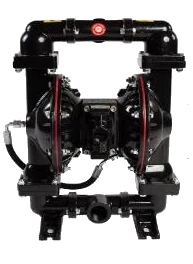
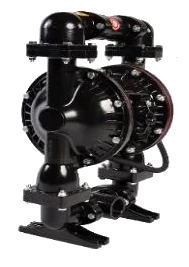
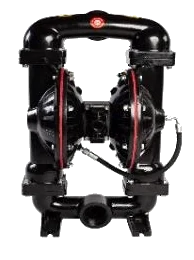
High Pressure Diaphragm Pump 160 Meter Head

Twice the head of a standard AODD pump - ~16 bar liquid pressure with a 2:1 pressure ratio and 160 m head - the reliable solution for long lines.

  • 160 m Height of Basma
  • Long Distance Transfer
  • Filter Pressure Supply
  • ATEX Certified

About the High Pressure Series

High Pressure Diaphragm Pump Why Is It Preferred?

High pressure diaphragm pumps are a specially designed series that doubles the discharge head of a standard AODD pump from 80 m to 160 m. Manufactured with aluminum, cast iron, and AISI 316L stainless steel body options, these models are designed to overcome the challenges of long pipe lines, transfers to high buildings, and filter press feeding circuits in the chemical, petrochemical, paint-coating, wastewater, and mining sectors. Four sizes ranging from the PP 100 model with 1'' connection to the PP 300 model with 2.5'' diameter meet different flow rates and process requirements.

In a standard AODD pump, an air pressure of 8.4 bar produces a liquid pressure of approximately 8.4 bar with a 1:1 ratio, which corresponds to a head of roughly 80 m in clean water. The high-pressure series exceeds this limit with its 2:1 pressure ratio design: the surface area of both diaphragms acts on a single liquid chamber, doubling the air pressure. This translates into an air inlet pressure of 8.4 bar into a liquid outlet pressure of approx. 16 bar and a static head of approx. 160 m for clean water - at the cost of about half the flow rate compared to a standard pump. This difference is a decisive selection criterion for transfers to a building roof, silo top or overhead storage tank and for horizontal pipelines of more than 500 meters.

Wide operating temperature range between -18°C and +100°C and resistance to dry operation make these pumps reliable under demanding process conditions. In filter press feed applications, the cyclic variability of process pressure necessitates compatible operation with the pressure adaptation of diaphragm pumps; centrifugal pumps in this scenario either experience cavitation or cannot provide constant flow rate. High-pressure diaphragm pumps therefore rank among the essential equipment of the filter press cycle.

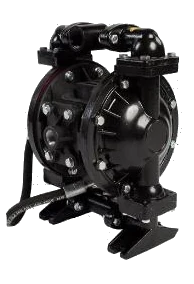
  • 160 m head height — twice the standard PA/PP series pump
  • 8.4 bar air inlet → ~16 bar liquid pressure with 2:1 ratio; -18°C to +100°C temperature range
  • 4 model: PP 100 (80 lpm) — PP 300 (440 lpm) flow range
  • Aluminum, cast iron, and 316L stainless steel body options
  • Filter pressure supply, coil line and roof tank transfer preferred standard
  • ATEX compliant configuration — ready for petrochemical and chemical EX zone applications

Technical Specifications

Prominent Advantages of the High Pressure Series

160 m Height of Basma

This series, which doubles the 80 m discharge height of a standard AODD pump, compensates for pressure losses at the end of the line in roof tank transfers of high-rise buildings, top storage silo feeding, and long horizontal piping lines.

Filter Pressure Supply Compatibility

As the system resistance increases in the filter press cycle, the pump flow rate automatically decreases while the pressure remains constant. This natural pressure-flow characteristic of diaphragm pumps provides a decisive advantage over centrifugal pumps in filter press circuits; the risk of excessive pressure and filter cake damage is eliminated.

Long Distance Transfer

It provides sufficient end-point pressure in 500+ meter pipe lines within chemical plants, in mining field surface-underground transfers, and in inter-floor chemical distribution lines in buildings. It eliminates the need for additional booster pumps and reduces facility costs.

Low Temperature Performance

Thanks to its -18°C operating capacity, it works safely in outdoor installations in cold climate conditions and in cooled chemical storage transfers. The metal body maintains its structural integrity at low temperatures.

ATEX Compliant Safety

Non-electric AODD principle and ATEX certified configuration provide safe installation in Zone 1–2 and Zone 21–22 explosive atmospheres of petrochemical and solvent paint facilities. Conductive metal housing prevents static electricity accumulation.

Endurance to Dry Work

In long-distance line transfers, resistance to dry running in case of level drop or pump emptying prevents body and diaphragm damage. When the line is refilled, the pump comes into operation smoothly; no additional startup procedure is required.

Model Comparison

High Pressure Series Model Technical Specifications

Model Connection Maximum. Debut Maximum Pressure Height of Basma Body
PP 100 1'' 80 lpm ~16 bar (2:1) 160 m AL / DD / SS
PP 150 1.5'' 200 lpm ~16 bar (2:1) 160 m AL / DD / SS
PP 200 2'' 280 lpm ~16 bar (2:1) 160 m AL / DD / SS
PP 300 2.5'' 440 lpm ~16 bar (2:1) 160 m AL / DD / SS

Frequently Asked Questions

High Pressure Diaphragm Pump Frequently Asked Questions

The high pressure series operates with a 2:1 pressure ratio: whereas in the standard AODD one unit of air pressure produces one unit of liquid pressure, in this series the surface area of both diaphragms acts on a single liquid chamber, doubling the air pressure. Thus an air intake of 8.4 bar translates into a liquid pressure of about 16 bar; for clean water (1 bar ≈ 10.2 m) this corresponds to a static head of about 160 m. Pipeline friction losses and fluid density reduce the actual usable head, so a line calculation must be performed for an accurate result. This gain is achieved at the cost of reducing the flow rate to about half that of a standard pump.
If the sum of static head or pipeline resistance losses in your system exceeds 80 m, the standard PA Series will be insufficient. The high-pressure series solves every scenario above this threshold: roof tank transfer, end of filter press feed circuit, long horizontal chemical line, or high-altitude transfer in a mining site.
In the filter press cycle, the system resistance increases continuously as the filter plates fill up; with constant flow pumps there is a risk of overpressure and mechanical damage. The air diaphragm pump, on the other hand, automatically reduces the flow rate when it reaches the limit set by the air pressure and stabilizes the pressure at this limit (deadhead); this behavior is an ideal pumping profile for filter press feed. The 160 m head guarantees sufficient pressure until the end of the filling cycle.
In large paint production facilities, the transfer of resin and solvent-based products to roof storage tanks, high-viscosity paint transfers through serpentine heating lines, and distribution lines between factory floors can create pressure requirements exceeding 80 m. In these applications, a single high-pressure AODD pump offers a simpler and more economical solution than adding a booster pump.
High pressure diaphragm pumps support Santoprene, Neoprene, Buna-N (NBR), EPDM, FKM and PTFE diaphragm options. FKM (Viton) is recommended for chemical solvents and paint fluids, while PTFE should be preferred for oxidizing chemicals and processes requiring broad compatibility. We recommend evaluating elastomer selection in conjunction with the fluid safety datasheet.
In mining areas, chemical transfer from the surface to underground pumping stations, transporting ore washing solutions to elevated storage tanks, and feed lines to process equipment positioned at high altitudes are typical application areas for this series. Resistance to dry running and ATEX option provide additional safety in intermittent operating conditions of mining sites and in flammable chemical environments.
Yes, the high-pressure series consumes more air per unit flow compared to a standard 1:1 AODD pump due to higher operating pressure. This difference should be taken into account when calculating compressor capacity. In energy efficiency evaluation, it is recommended to perform a comparative calculation considering the additional booster pump cost and operating expenses; in most scenarios, a single high-pressure AODD pump proves to be more economical.
In treatment facilities, feeding sludge dewatering filter presses, polymer dosing to elevated anaerobic reactors or biogas systems, active sludge transfer to remote points, or pumping biosolids to off-site storage tanks may create pressure requirements exceeding 80 m. At these points, high-pressure diaphragm pumps are the preferred standard for wastewater applications due to their dry-run resistance and high particulate tolerance characteristics.

Chemical Compatibility Chart

Check the chemical resistance of the pump casing and diaphragm material as A/B/C/D from the table.

Go to Table

For Your Long Distance Application

Let's Determine the Correct Model for 160 Meter Stamping Height

Share your pipeline length, static head, fluid properties, and flow rate requirements; let us select the correct high-pressure model and elastomer combination together.

Ask Price