+90 554 128 90 95 [email protected]

Sector Application

Mining Industry
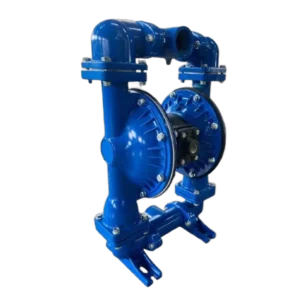
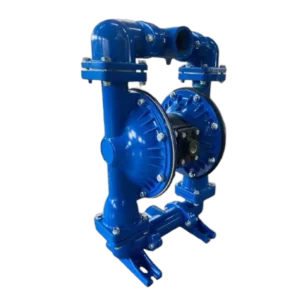
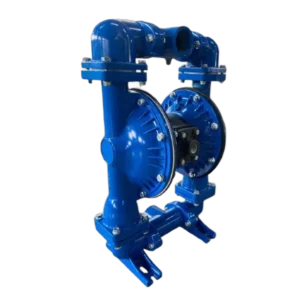
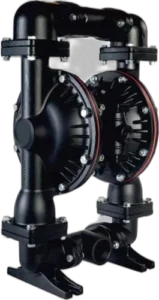
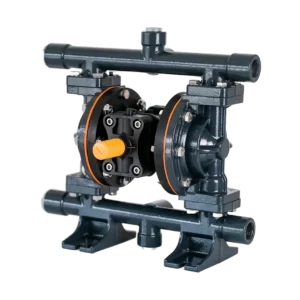
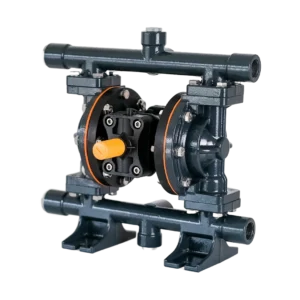
Diaphragm Pump

Robust pumping solutions for abrasive, corrosive fluids such as slurry, ore sludge and acid mine drainage.

  • Mining & Quarry
  • Slurry & Dewatering
  • Abrasion Resistant

Mining Sector

Reliable Transfer in Slurry and Mud

Slurry is a mixture of solid particles - sand, ore, clay, tailings - suspended in water or liquid. Three factors make it difficult to pump: as the solids increase, the mixture becomes heavier and requires more power, the hard and angular particles constantly abrade the pump surfaces, and when the pump stops, the solids settle to the bottom. In mining and quarrying applications, the pump has to cope with these three challenges simultaneously.

Air diaphragm (AODD) pumps are preferred in the mine site, especially for corrosive operations such as dewatering, sump emptying, medium density slurry transfer, flotation reagent dosing and acid mine drainage (AMD); since the rotating part is not in contact with the fluid, it can withstand abrasive and corrosive liquids, can run dry and can be transported. For very high tonnage main tailing lines, centrifugal slurry pumps with high-chrome or rubber liners are generally used.

Pumpport PA series metal casing diaphragm pumps safely transport solid containing fluids with cast aluminum and SS316L casing options and corrosive mine drainage with PP/PVDF casing options.

  • Slurry = liquid + suspended solid; abrasion, density and settling difficulties
  • Large ball valve - coarse mineral particle passage
  • Can run dry - no damage when sump/sump empties
  • PP/PVDF body + PTFE diaphragm for corrosive AMD
  • Portable; no electricity required, air line only
  • Field maintenance: tool-free, quick diaphragm and seal replacement

Advantages

Highlights for the Mining Industry

Solid & Particle Tolerance

Large ball valves pass coarse mineral and slurry particles without clogging.
Dry Operation

When the sump or tank is empty, it continues to operate without damage; no constant monitoring of fullness is required.

Corrosion Resistance (AMD)

Withstands low pH with PP/PVDF body and PTFE diaphragm for acid mine drainage.

Field Maintenance

No special tooling required; quick diaphragm and seal replacement in field conditions.

Application Areas

Where is it used in the mine site?

Dewatering

Drains water containing sludge and coarse solids without clogging; runs dry when water runs out.

Slurry & Tailing Transfer

Suitable for medium density ore slurry and tailing transfer.

Reagent & Flotation Dosage

Controlled dosing of flotation reagent, acid-base and process chemicals.

Acid Mine Drainage (AMD)

PP/PVDF body + PTFE diaphragm for corrosive drainage water with low pH.

Sump / Pit Drain

Draining the accumulation at the bottom of the gallery and pit with a portable pump.

Slurry Challenges

Factors Making Shlam Difficult

Factor Impact Reflection on Pump Selection
Solid content (% by weight) Density, viscosity and wear increase Upper flow rate class + higher air capacity
Particle size Large particles stress valve and diaphragm Large ball valve opening; sieve if required
Particle shape (angular/sharp) Significantly accelerates wear Abrasion resistant diaphragm (Santoprene/PTFE)
Low pH (acid mine drainage) Corrosion of the metal body PP/PVDF body + PTFE diaphragm
Slumping tendency (when the pump stops) Line blockage and difficulty restarting Sufficient line speed; position the pump close to the source

Frequently Asked Questions

Things to Consider When Choosing a Mining Pump

Slurry is a mixture of solid particles (sand, ore, clay, waste/tailing) suspended in water or liquid. Three factors make it difficult to pump: (1) the higher the solids content, the denser the mixture and the more power it requires; (2) hard and angular particles constantly abrade the pump surfaces; (3) solids settle to the bottom when the pump stops. Therefore, abrasion resistance, solids passage and dry running tolerance are decisive for slurry pumps.
AODD pumps stand out in corrosive jobs such as dewatering, pit/sump emptying, medium density slurry transfer, flotation reagent and chemical dosing, acid mine drainage (AMD). Since the rotating part is not in contact with the fluid, it withstands abrasive and corrosive fluids, can run dry and can be transported. For very high tonnage, coarse and extremely abrasive main tailing lines, high-chrome or rubber-lined centrifugal slurry pumps are generally used.
The higher the solids content (% by weight), the denser the slurry, the higher the required air pressure and consumption, and the faster the abrasion as the particles hit the surfaces more frequently. For densities above about 1.3 kg/L, it is necessary to select an upper flow rate class and size the air supply accordingly. It is also important to keep the line speed sufficient to prevent solids settling.
Wear increases with solids content, particle size and particle angularity. To prolong life, choose a wear-resistant diaphragm (Santoprene or backed PTFE), large ball valve and appropriate line speed; position the pump as close to the fluid level as possible. For very coarse or sharp particles, limiting the particle size with a sieve significantly increases life.
In acid mine drainage, where the pH is often below 3, the metal body corrodes, so PP or PVDF body with PTFE diaphragm/valve is preferred. PVDF + PTFE is the safest combination when high sulfate/salt and low pH are combined. It is necessary to verify the choice of material from the chemical compatibility table.
Diaphragm pumps pump water containing sludge, sand and coarse solids without clogging, run dry when the water runs out (no damage when the sump empties) and are safe to use in wet and explosive (ATEX) environments as they only run on air lines and do not require electricity. These features make them practical for temporary dewatering and pit emptying.

Chemical Compatibility Chart

Check the chemical resistance of the pump casing and diaphragm material as A/B/C/D from the table.
Go to Table

For Mining Application

Let's Choose Your Slurry Pump Together

Contact our technical team to determine the most suitable pump for your particle size, density, pH and pressure requirements.

Ask Price