+90 554 128 90 95 [email protected]

Technical Guide

Diaphragm Pump
What is it?

Comprehensive introductory guide to the working principle, components and application areas of the AODD pump.

  • Start Guide
  • Working Principle
  • Application Areas

Basic Knowledge

How Does an Air Diaphragm Pump Work?

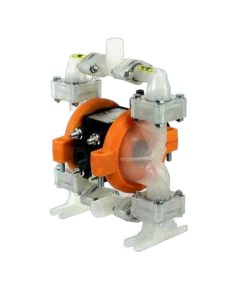
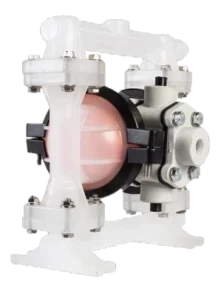
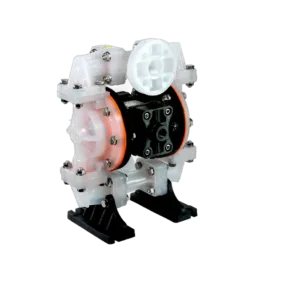
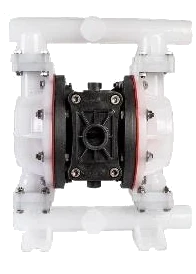
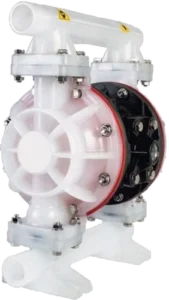
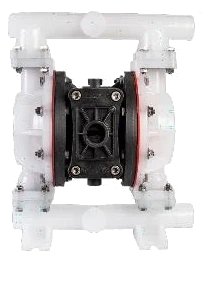
The Air-Operated Double Diaphragm pump (AODD) is a type of pump that operates with compressed air, is self-filling and resistant to dry running. It has two symmetrical pump chambers; each chamber has a diaphragm and the diaphragms move alternately to push the fluid.

The central air distribution valve directs the compressed air to both sides in turn. The left diaphragm is pushed forward while the right diaphragm retracts; the fluid is directed through the suction and discharge valves. Thanks to this mechanism, the pump produces a smooth, pulsating flow.

  • No electricity required - just compressed air
  • Dry-run resistant, self-refillable
  • Suitable for fluids containing solid particles
  • Pulse flow - preferred for precise chemical dosing
  • Safe in explosive environment (with ATEX option)

Pump Anatomy

Diaphragm Pump
Basic Parts

Diaphragm

The heart of the pump. Made of PTFE, EPDM or NBR; flexible membrane that pushes and pulls the fluid.

Ball Valve

Non-return valve that controls the suction and discharge directions. Also known as a ball or ball valve.

Air Distribution Valve

Automatic transmission valve that directs compressed air sequentially into both pump chambers.

Body

PP, PVDF, aluminum or SS316L, depending on the fluid and medium.

Frequently Asked Questions

About Diaphragm Pump

Centrifugal pumps operate in continuous rotary motion and are suitable for clean and low viscosity fluids. Diaphragm pumps, on the other hand, are positive displacement, self-filling, dry-running and preferred for particulate or viscous fluids.
Standard AODD pumps operate with an air-liquid pressure ratio of 1:1, i.e. 6 bar air pressure to approximately 6 bar liquid pressure. High pressure diaphragm pumps can reach up to 8.4 bar.
Choose a diaphragm pump if: (1) the fluid contains particles, (2) there is a risk of dry running, (3) there is no electricity in an explosive atmosphere, (4) low flow precision dosing is required, (5) corrosive chemicals are to be transported.
Diaphragm life varies according to fluid type, working pressure and diaphragm material. Under normal conditions a PTFE diaphragm can serve between 5,000-10,000 hours. Chemical damage or dry running significantly shortens this period.

For Your Application

Let's Choose the Right Diaphragm Pump Together

Share your fluid properties, flow rate and pressure requirements and we will recommend the most suitable model.

Ask Price