+90 554 128 90 95 [email protected]

Diaphragm Pumps

Plastic Diaphragm Pump
PP Series

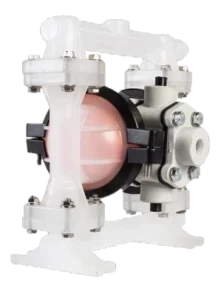
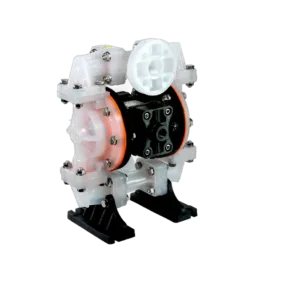
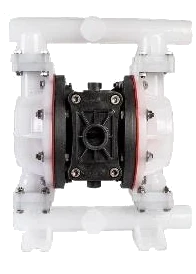
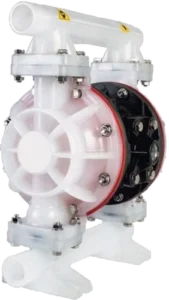
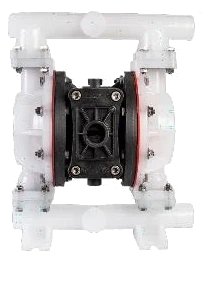
Polypropylene and PVDF bodied, light and reliable solution in chemical transfer with a wide model range from 1/4'' to 3''.

  • Lightweight Polypropylene Body
  • High Chemical Resistance
  • ATEX Compliant
  • 7 Bar Max. Pressure

About PP Series

Diaphragm Pump with Plastic Why Is It Preferred?

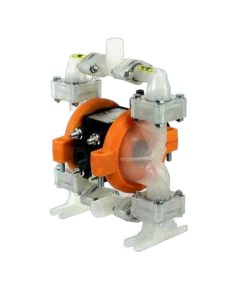
Plastic diaphragm pumps (PP Series) are manufactured with polypropylene (PP) or PVDF bodies, exhibiting resistance beyond metal body alternatives against corrosive chemicals such as acids, bases, and solvents. Six main sizes, ranging from the compact PP 02 model with 1/4'' connection to the high-flow PP 30 model with 3'' diameter, cover a very wide range of processes under a single series. The series also includes vertical/side-connection Y variants (PP 02Y, PP 05Y, PP 10Y); these models are preferred in confined installation areas and at piping points where space savings are desired.

The total weight of PP Series pumps is significantly lower compared to metal pumps with equivalent flow capacity; the largest model, PP 30, has a carrying weight of only 49 kg. This lightness facilitates field installation while also reducing transportation and repositioning costs. Structural resistance to dry running provides safe background protection in processes where level fluctuations are intense. The air-operated AODD architecture offers a natural advantage in fields without electrical infrastructure or those within EX zones.

The PVDF body option further extends the pump's temperature resistance and chemical compatibility; PVDF is preferred for processes that exceed the limits of the PP body, particularly against oxidizing acids (HNO₃, HClO₄), organic solvents, and various fluorine compounds. In applications for use in the food industry, the combination of FDA-approved PVDF body and PTFE diaphragm guarantees product purity and absence of trace contaminants. On the elastomer side, fluid-specific selection can be made from Santoprene, Neoprene, Buna-N (NBR), EPDM, FKM, and PTFE; this flexibility makes the PP Series one of the most customizable diaphragm pump families.

  • PP 02 to PP 30 six sizes: seamless model range from 16 lpm to 894 lpm
  • PP and PVDF body option — wide chemical compatibility, zero metal corrosion
  • Maximum working pressure 7 bar, temperature range 0°C to +100°C
  • Particle permeability between 1 mm (PP 02) and 9 mm (PP 30)
  • Y variants (PP 02Y / 05Y / 10Y) with vertical/side connection option
  • ATEX compliant, CE and ISO certified — ready for explosive environments and mandatory documentation procedures

Technical Specifications

Highlighted Advantages of the PP Series

Superior Chemical Resistance

The polypropylene housing demonstrates high chemical resistance against dilute acids, bases, salt solutions and non-polar solvents. With the PVDF option, this resistance extends to oxidizing acids and organic halogenated compounds.

Low Weight Advantage

The PP 30 model is one of the lightest AODD options in large size with only 49 kg. The lightweight body allows for temporary or mobile installation instead of permanent ground mounting; it can be positioned by field crews without requiring a crane.

Endurance to Dry Work

The PP Series does not cause permanent damage to the body or diaphragm when it continues to operate without fluid. Additional protective systems are not required in level fluctuation and pump priming entry scenarios.

ATEX Compliant Safety

The PP Series, with its pneumatic operating principle without electricity and conductor/antistatic material options, can be safely deployed in Zone 1–2 (gas) and Zone 21–22 (dust) explosive atmospheres.

Six Elastomer Options

The PP Series with Santoprene, Neoprene, Buna-N, EPDM, FKM and PTFE diaphragm options allows full customization according to temperature, chemical compatibility and cost parameters.

Y Variant with Flexible Connection

PP 02Y, PP 05Y and PP 10Y models eliminate plumbing restrictions with vertical and side connection points. While delivering the same hydraulic performance as standard models, they adapt to different assembly geometries.

Model Comparison

PP Series Model Technical Specifications

Model Connection Maximum. Debut Maximum Pressure Body Application
PP 02 1/4'' 16 lpm 7 bar PP / PVDF Chemistry, Dosage
PP 02Y 1/4'' 16 lpm 7 bar PP / PVDF Alan Assembly or Field Assembly
PP 05 3/4'' 57 lpm 7 bar PP / PVDF Chemistry, Paint
PP 05Y 3/4'' 57 lpm 7 bar PP / PVDF Vertical Connection
PP 10 1'' 160 lpm 7 bar PP / PVDF Chemistry, Wastewater
PP 10Y 1'' 160 lpm 7 bar PP / PVDF Vertical Connection
PP 15 1.5'' 400 lpm 7 bar PP / PVDF Paint, Mining, Food
PP 20 2'' 565 lpm 7 bar PP / PVDF Petrochemistry, Wastewater
PP 30 3'' 894 lpm 7 bar PP / PVDF High Flow, Mining

Frequently Asked Questions

Plastic Diaphragm Pump Frequently Asked Questions

Polypropylene (PP) is an economical and adequate choice for dilute acids, bases, and salt solutions; it performs well in a working range of 0–100°C. PVDF, on the other hand, is preferred for processes involving concentrated oxidizing acids (HNO₃, HClO₄), organic halogens, and those requiring UV resistance; although its cost is higher, the range of chemical resistance it offers is much broader.
PP Series housing safely operates between 0°C and +100°C. For applications requiring lower temperatures (-18°C and below), PA Series metal-housed models should be preferred; polypropylene can become brittle at low temperatures.
Yes. PP 30 has a flow capacity of 894 lpm with a 3'' connection diameter and 7 bar maximum working pressure. The actual process flow rate varies depending on air pressure, pipeline resistance, and fluid viscosity. It is recommended that you share fluid information with our technical team for capacity calculation.
Particle permeability varies according to the model: PP 02 passes solid matter up to a maximum of 1 mm in diameter, while PP 30 can transport particles up to 9 mm without risk of clogging. For high solids concentration sludge applications, it is recommended to prefer larger size models.
Y variants have alternative connection geometry that allows suction and discharge connections to exit in vertical or side positions. The hydraulic performance and technical specifications are identical to standard models; only the installation geometry differs. They are preferred for adapting to narrow piping areas or existing pipeline directions.
Yes. The PP Series can be configured appropriately for ATEX Zone 1–2 (gas/vapor) and Zone 21–22 (combustible dust) environments with conductive or antistatic material options. During installation, the pump body must be connected to the static grounding line; this connection is a critical requirement for maintaining EX certification.
FDA approved PVDF body and PTFE or EPDM diaphragm combination, the PP Series can be used in food and beverage transfer. However, for hygienic processes that come into direct contact with consumable products, the PH Series hygienic models, which offer completely corner-free internal geometry and CIP/SIP compatibility, are a more suitable choice.
Corrosive chemicals, lightweight requirements or low cost priorities, PP Series is the appropriate choice. If operation below -18°C, mechanical impact risk, pressure above 8.4 bar or petrochemical solvent transfer is involved, metal PA Series should be preferred; steel body eliminates low temperature brittleness and mechanical damage risk.

For Your Application

Correct PP Series Model Let's Determine Together

Share your fluid type, temperature, flow rate, and pressure requirements; we will recommend the most suitable PP Series model and elastomer combination for you.

Ask Price